

KEY TAKEAWAYS
- 38% of U.S. travelers are taking fewer or shorter trips, and 33% are choosing destinations closer to home.
- 53% now book major trips earlier than they used to, including 33% who book much earlier to lock in lower prices.
- When budgets feel tight, 52% cut spending on shopping and souvenirs first, while protecting food and experiences.
- 46% reduce spending on flights vs. 34% on lodging, prioritizing vacation stays over travel to the destination.
Higher prices haven’t sidelined vacations. Americans refuse to let rising costs scrap their 2026 travel plans — instead, they’re determined to make trips happen by any means necessary. Travel has become less of a nice-to-have and more of a need people protect fiercely.
Our recent national survey of over 1,000 U.S. adults reveals how they’re pulling it off. Surprisingly, zero respondents say they’re skipping vacations altogether, and almost nine in 10 are taking creative measures to save on costs. Both of these points prove travel’s staying power even when dollars are stretched thin.
This study breaks down their real tactics, from resizing trips, cutting extras while guarding experiences, and booking ahead to beat price jumps. You’ll see how everyday travelers keep getaways alive without breaking the bank.
About 4 in 10 Downsize Trips to Save on Vacation Costs
Travelers are using a variety of tactics to keep their plans on track. Our data shows that 38% are taking fewer or shorter trips and 33% are picking destinations closer to home. Another 23% now travel during off-peak or shoulder seasons to avoid the highest price tags.
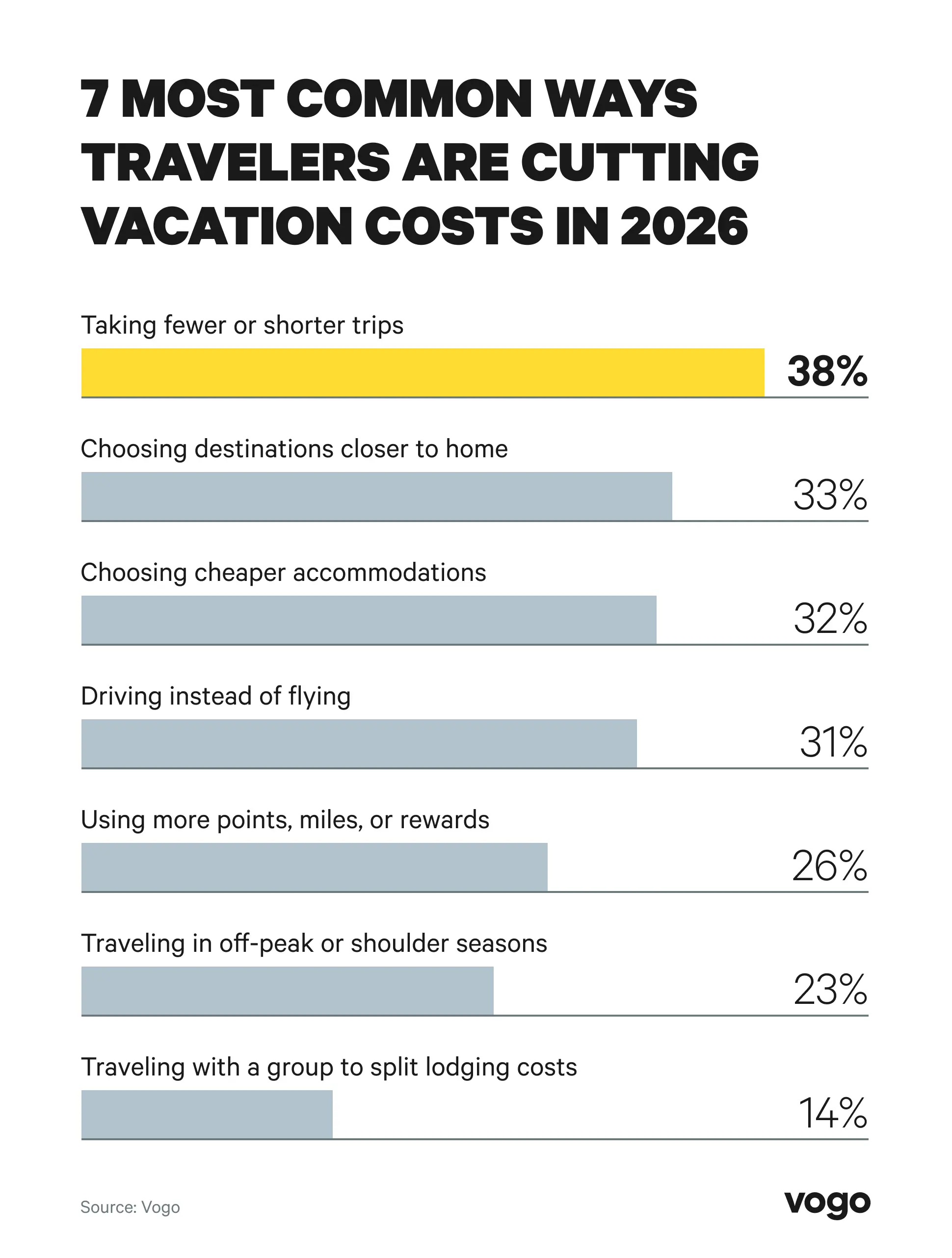
The trade-offs continue with how people get to and stay at their destinations. We found that 32% are opting for cheaper accommodations and 31% are driving instead of flying. These shifts suggest that many travelers are willing to give up some comfort or speed if it means they can still afford to go.
Many are also turning to their “travel piggy banks” to offset costs. About 26% are leaning more on points and miles, suggesting that people are finally cashing in rewards they might have previously saved. Another 14% are traveling with a group to split the bill for lodging. By stacking these different methods, travelers are finding ways to maintain their travel frequency without overspending.
More Than Half of Travelers Skip the Gift Shop First to Prioritize Core Travel Costs
When budgets feel stretched, travelers protect the core experience by cutting back on the small things during their trips. Our survey found that 52% reduce spending on shopping and souvenirs. Another 49% cut back on conveniences like taxis, rideshares, parking, and early check-in fees.
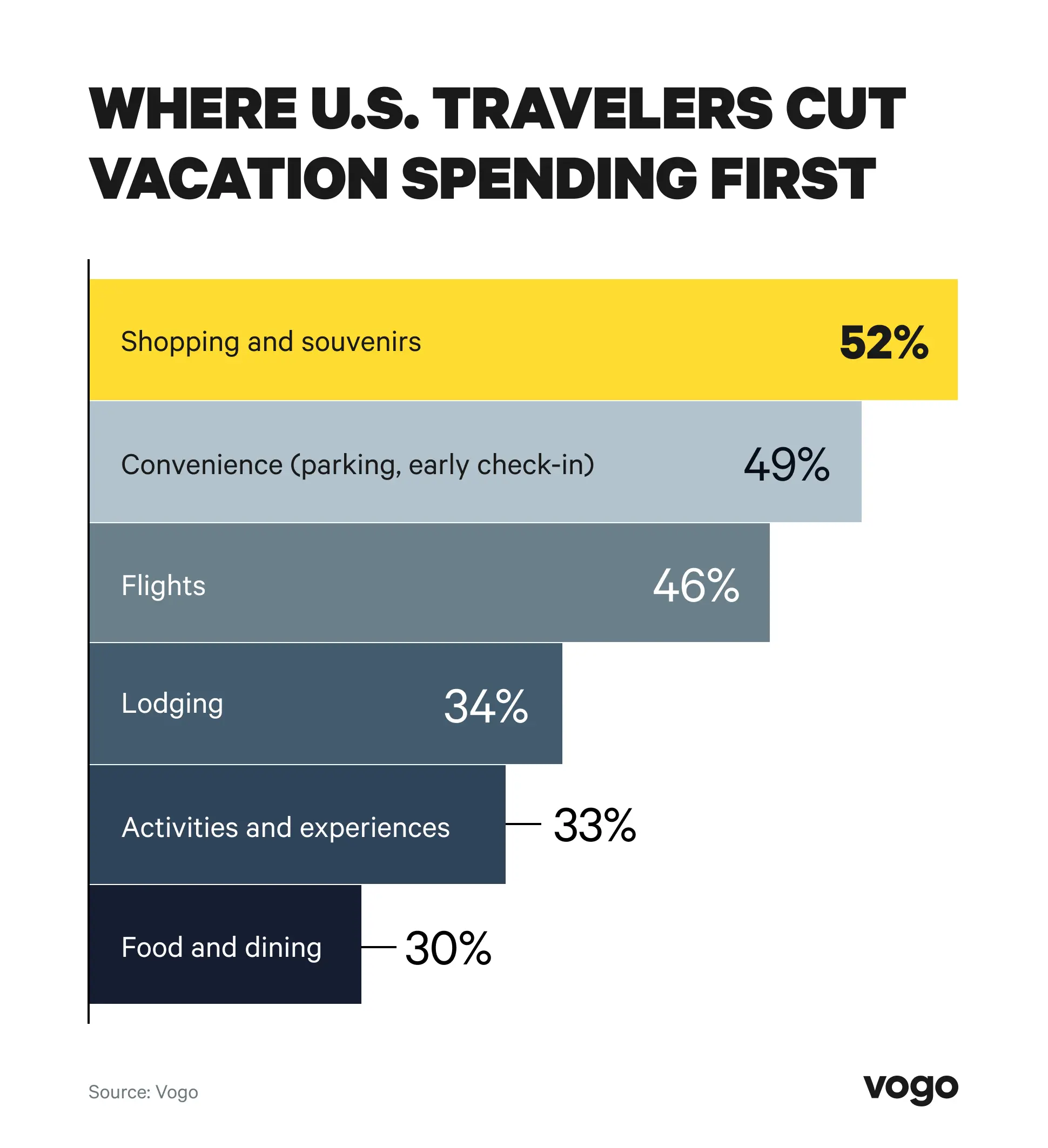
The data also shows a clear preference for the stay over the transit. While 46% of people will reduce what they spend on flights, only 34% are willing to cut their lodging budget. It seems that for most, the destination itself matters more than the journey it takes to get there.
On-the-ground experiences remain a high priority. Only 30% of travelers reduce their spending on food and dining, and just 33% cut back on activities and excursions. This confirms that people would rather skip the gift shop than miss out on a great meal or a memorable tour.
Almost a Third of Travelers Choose a Less Expensive Hotel When Prices Rise
When lodging prices climb, most travelers would rather downgrade their amenities than rethink their entire approach to a stay. Our survey found that 28% of people choose a cheaper resort or hotel with fewer stars or amenities as their primary way to save. This preference for staying in a hotel is much more common than switching to a different type of lodging altogether.
Only 11% of travelers move from a hotel to a vacation rental when costs rise. A nearly equal 9% do the exact opposite by switching from a rental to a hotel. This suggests that price increases don’t prompt most travelers to reconsider their lodging preferences to manage their travel budget. Instead, they look for a more affordable version of what they originally set out to book — regardless of the type of lodging.
Other travelers look for savings by adjusting their location or the length of their stay. About 9% seek out alternative options like house-sitting or staying with friends, while 8% choose to stay farther from main attractions to find a better rate. Another 8% keep their preferred hotel or rental but simply cut a day or two off the trip to keep the total cost manageable.
Overall, these behaviors show that travelers prioritize stability and ease during an expensive year. By finding a cheaper version of what they already know, travelers can keep their plans predictable while still keeping costs under control.
More Than Half Book Early in Hopes of a Good Deal
Securing a deal in 2026 requires a proactive approach. We found that 33% of travelers now book major trips much earlier than they used to specifically to lock in lower prices. Another 20% are booking somewhat earlier, marking a significant shift toward advance planning as a primary saving strategy.
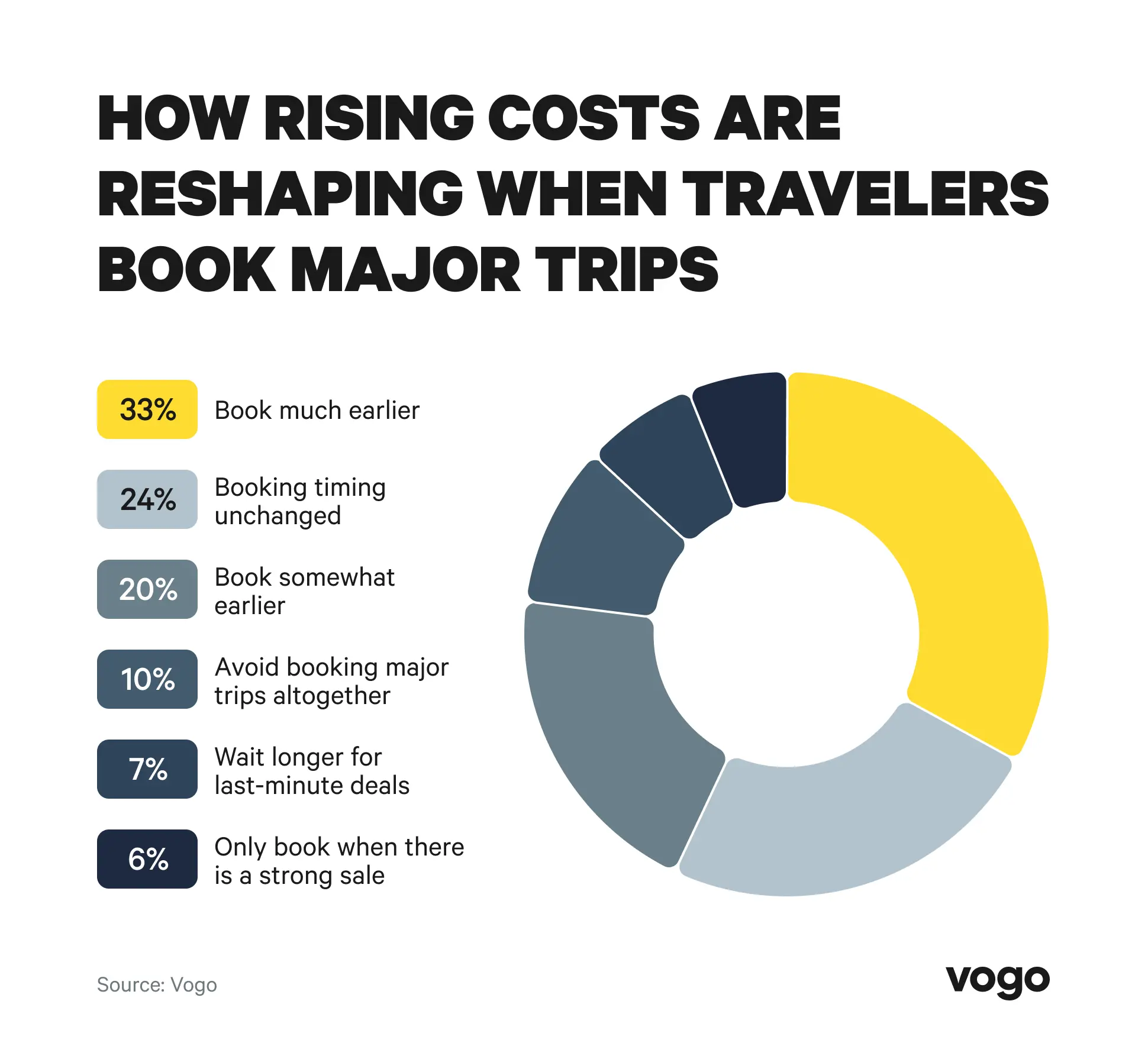
This hotel booking hack — committing to a stay months in advance — flips the old “wait and see” model of travel deals. Instead of hoping for a lucky last-minute discount, travelers are taking control by committing early to protect their budgets from future price jumps.
While over half of travelers are moving their booking dates up, others are sticking to old habits or being forced to pivot. About 24% say their timing hasn’t changed, and a small group still hunts for deals by waiting for last-minute drops (7%) or specific sales (6%). However, the high cost of travel is hitting a ceiling for some.
We found that 10% of respondents avoid booking major trips altogether because prices feel too high. Since our earlier data showed that no one is skipping vacations entirely, this suggests that a portion of the population is simply swapping big “bucket list” journeys for smaller, more affordable getaways.
The benefits of opting for shorter getaways go beyond cost savings. Another Vogo study revealed that 63% of travelers said they choose shorter trips because they are easier to plan and feel less stressful.
Make Rising Costs Work for Your Next Trip
You can protect the core of your own vacation plans by trimming the extras, booking earlier, and choosing value-driven lodging that fits your budget. Smart travelers are proving that you don’t have to cancel your plans to stay on track. It is simply about being more intentional with where your dollars go.
Vogo helps you spot these opportunities quickly. Whether you need to find a cheaper hotel before prices climb or compare flexible dates to save on your stay, our tools keep your travel goals within reach.
Ready to outsmart rising costs? Start planning on Vogo to compare hotels, track price drops, and lock in the best deals.
Methodology
The survey was conducted by Centiment for Vogo. The survey was fielded between March 9, 2026, and March 11, 2026. The results are based on 1,023 completed surveys. In order to qualify, respondents were screened to be residents of the United States, over 18 years of age. Data is unweighted, and the margin of error is approximately +/-3% for the overall sample with a 95% confidence level.