

KEY TAKEAWAYS
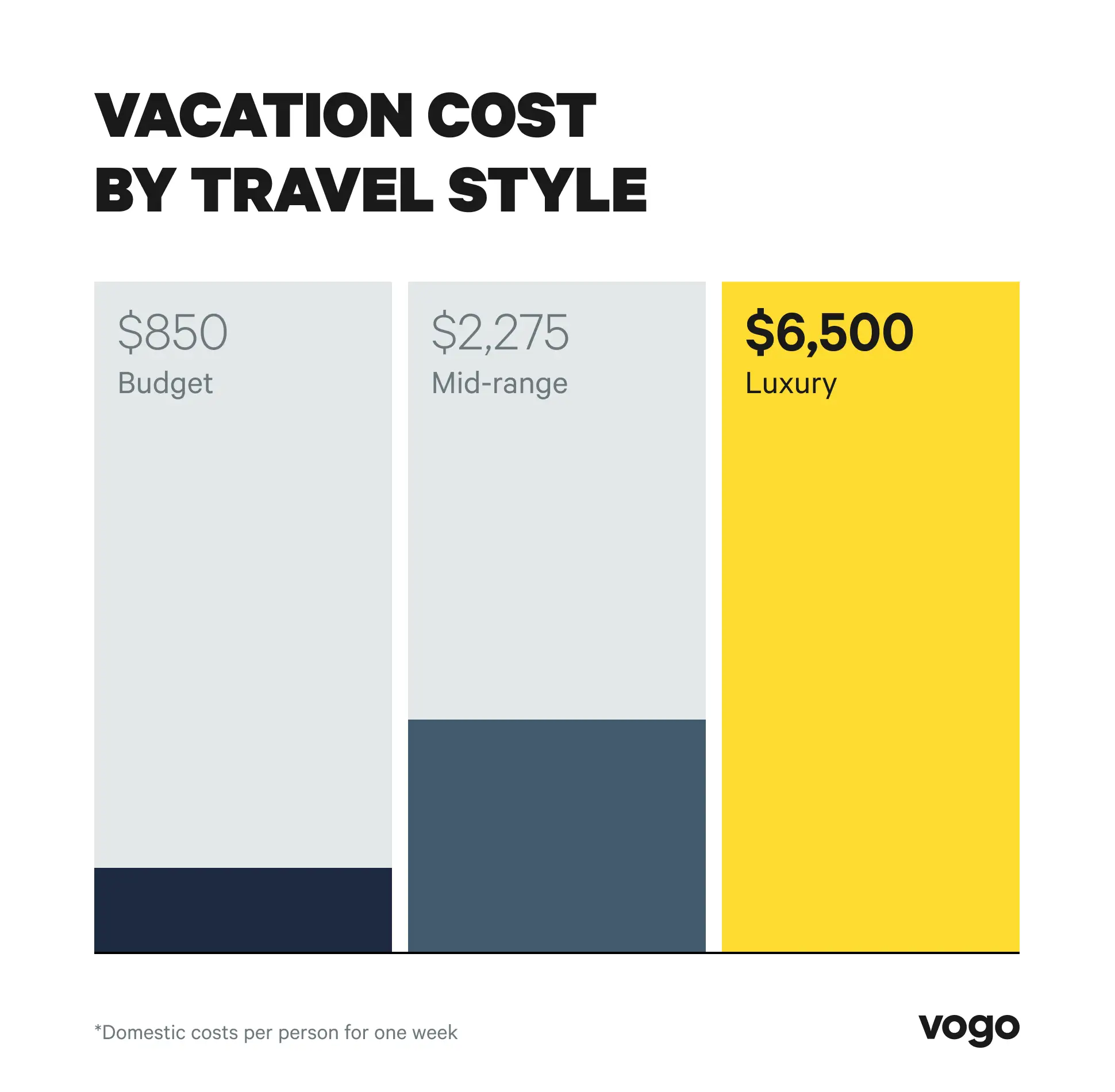
- The average vacation cost for a 7-day trip in 2026 is $1,900–$2,300 per person, depending on destination and travel style.
- Flights and accommodations make up the largest share of total travel expenses.
- Choosing destinations with lower daily costs can increase trip length or upgrade experience at a similar total budget.
Planning a trip starts with understanding the total vacation cost, which can vary widely based on destination, travel style, and timing. In 2026, travelers spend an average of around $1,900 per person or $3,900 as a couple for a one-week domestic trip.
Families, solo travelers, and budget-conscious planners increasingly compare options across destinations to identify cheap places to travel that offer memorable experiences without significantly increasing total spend.
This guide breaks down the main factors that influence travel costs, including transportation, accommodations, food, and activities. Also, explore practical strategies to help travelers plan smarter, avoid hidden expenses, and find accommodations that align with both budget and travel style.
Major Travel Expense Categories to Consider
Understanding where travel dollars go helps travelers plan more realistic budgets.
While prices vary widely by travel style, destination, and season, most vacation budgets are shaped by four core categories: transportation, lodging, food, and activities.
Planning ahead and comparing options can help travelers balance comfort and overall vacation cost without overspending.
Transportation and Airfare
Transportation often accounts for a large portion of a travel budget. In 2026, flight prices continue to fluctuate based on fuel costs, seasonal demand, and route popularity. Booking within recommended windows can help travelers secure better pricing.
Fuel surcharges and peak travel periods, such as summer and holidays, often increase airfare pricing. Booking 1–3 months in advance for domestic flights and 2–8 months in advance for international flights can help travelers find lower fares.
Travelers should also factor in transportation to and from the airport, which can add $20–$100+ each way depending on distance and location. Choosing accommodations near transit or with airport transfers can help reduce overall costs.
Here’s a breakdown of typical price ranges for transportation:
| Transportation | Cost |
|---|---|
| Airport parking | $10–$30 per day |
| Airfare | $250–$1,200 round trip |
| Rental car | $50–$90 per day |
| Gas | $40–$80 per week |
| Public transportation | $5–$15 per day |
| Rideshare | $15–$40 per ride |
Accommodation and Lodging
Accommodation pricing varies significantly based on location, amenities, and travel season. Many travelers now compare hotels, vacation rentals, and the best family resorts to find the right balance of comfort, amenities, and price.
Additional fees, such as resort charges or cleaning fees, can increase the total nightly rate beyond the advertised base price.
Example mid-range hotel pricing:
- Orlando: $140–$220 per night
- New York City: $220–$350 per night
- London: $200–$320 per night
Resort fees and cleaning fees can add $25–$60 per night, increasing the final total cost.
| Lodging | Cost |
|---|---|
| Hostels/ budget stays | $40–$80 per night |
| Hotel | $150–$300 per night |
| Resort | $250–$500+ per night |
| Vacation rental | $120–$350 per night |
Food, Drinks, and Dining
Daily food costs vary based on dining preferences and destination pricing. Travelers who balance restaurant meals with grocery purchases often reduce weekly food costs, particularly when booking accommodations with a kitchen or kitchenette.
Access to basic cooking amenities makes it easier to prepare breakfasts, snacks, or occasional dinners, helping stretch the overall travel budget.
It can also help to think of food spending as the net difference from what would normally be spent at home. For travelers who already dine out frequently, total food costs during a trip may not increase as much as expected, especially when mixing casual meals, groceries, and occasional higher-end dining experiences.
Typical daily ranges:
- Local cafes and casual dining: $40–$70 per day
- Mix of dining out and groceries: $50–$80 per day
- Higher-end restaurants: $90–$150+ per day
Estimated grocery-focused budget: $60–$90 per week for breakfast and snacks, which can reduce total food spending by $300 or more per week for longer trips
Average extra costs:
- Coffee: $4–$7
- Cocktail: $12–$20 in major tourist cities
- Casual lunch: $15–$25
| Food and drinks | Cost |
|---|---|
| Breakfast, lunch, and dinner | $40–$150 per day |
| Dining out | $20–$60 per meal |
| Drinks | $4–$20 each |
Entertainment and Shopping
Activities, attractions, and shopping often vary the most depending on travel style. Some destinations offer low-cost or free sightseeing, while others rely heavily on ticketed experiences.
Budgeting for activities in advance helps travelers avoid unexpected overspending during the trip.
| Entertainment and shopping | Cost |
|---|---|
| Museum and attraction tickets | $15–$35 |
| Guided tours and excursions | $50–$150 |
| Theme parks and premium experiences | $120–$200 |
| Souvenirs and shopping | $25–$100 per day |
| Nightlife and events | $20–$80 |
Real Vacation Cost Examples
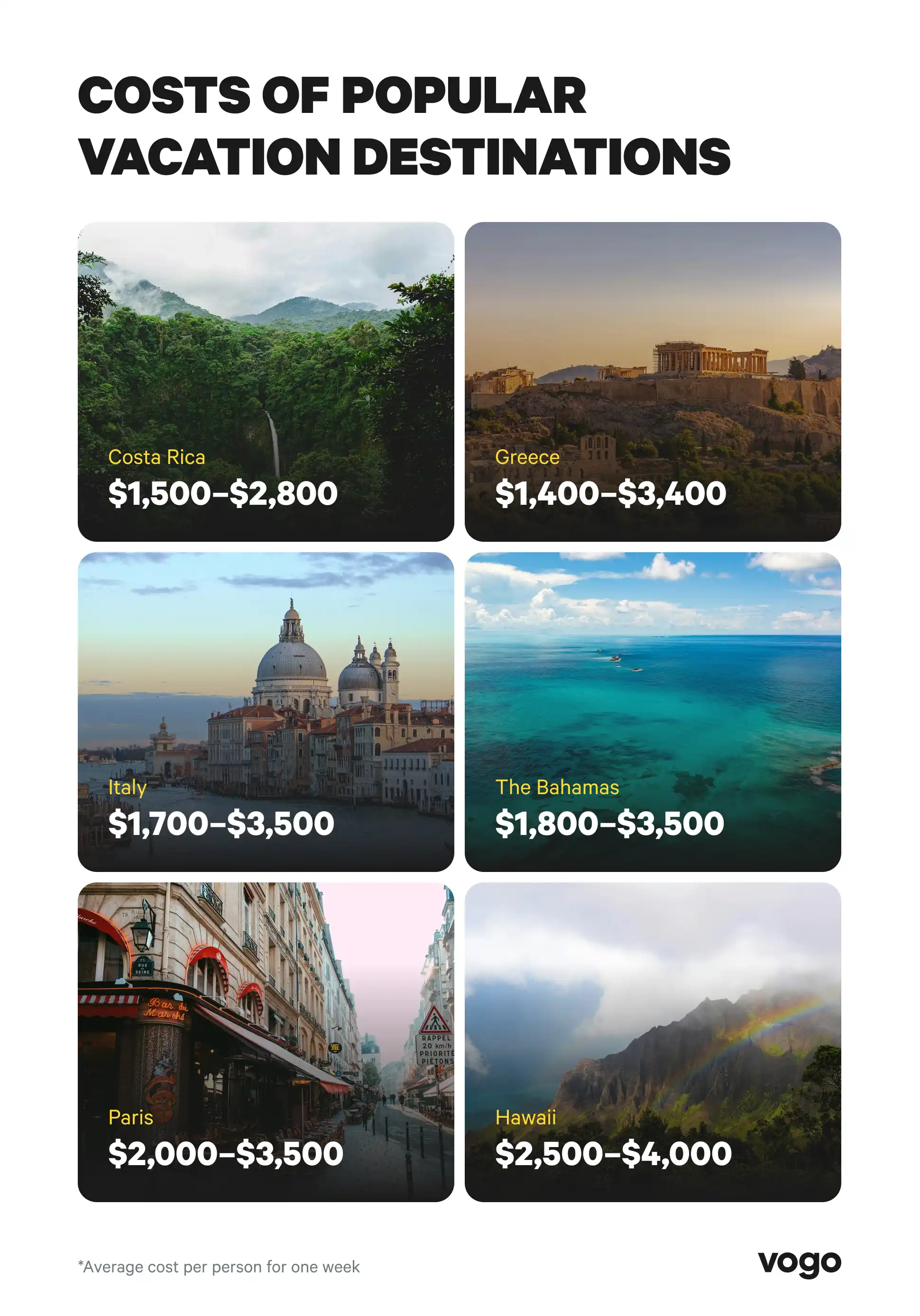
Vacation costs vary significantly depending on destination, travel style, and season. The examples below reflect estimated weekly ranges for U.S.-based travelers, typically calculated per person for mid-range trips that include flights, accommodations, food, transportation, and activities.
Actual costs may vary depending on trip timing, booking window, and accommodation type.
Popular Tropical Destinations
Tropical destinations often have higher airfare but can vary widely in daily expenses depending on accommodation type and local cost of living. They’re also a top choice for romantic getaways, with many resorts offering private experiences and all-inclusive packages.
Here are some examples of popular tropical vacation spots and what they typically cost:
Note: Pricing estimates reflect typical mid-range shoulder season ranges observed across major booking platforms and airline data at the time of writing. Travel costs change frequently based on demand, seasonality, number of stops, and fuel prices. Reviewing current pricing closer to the booking date helps ensure accuracy.
Bahamas vacation cost
- Flights: $400–$700, depending on departure city and season
- Hotels or all-inclusive resorts: $200–$450 per night
- Estimated weekly cost per person: $1,800–$3,500
*Activities and dining are often included in package pricing for all-inclusive resorts
Costa Rica vacation cost
- Flights: $350–$700, depending on departure city and season
- Hotels: $120–$300 per night
- Activities such as ziplining or national parks: $60–$150 per experience
- Estimated weekly cost per person: $1,500–$2,800
Hawaii vacation cost
- Flights: $500–$1,000, depending on departure city and season
- Hotels: $250–$400 per night
- Activities and food: $150–$250 per day
- Estimated weekly cost per person: $2,500–$4,000
These destinations are popular due to predictable weather, strong tourism infrastructure, and a wide range of accommodation options.
Popular European Destinations
European trips often include higher flight costs but can offer strong value once travelers arrive, especially when visiting multiple cities.
Paris vacation cost
- Flights: $750–$1,340, depending on departure city and season
- Hotels: $180–$350 per night
- Dining and attractions: $100–$180 per day
- Estimated weekly cost per person: $2,000–$3,500
*Transportation via metro or train keeps local travel affordable
Greece vacation cost
- Flights: $700–$1,400, depending on departure city and season
- Hotels: $120–$300 per night
- Daily food and transportation: $50–$90 per day
- Estimated weekly cost per person: $1,400–$3,400
Italy vacation cost
- Flights: $600–$985 depending on season
- Hotels: $120–$250 per night
- Food, transportation, and attractions: $80–$150 per day
- Estimated weekly cost per person: $1,700–$3,500
Travelers often find that selecting destinations with lower daily costs allows for longer stays or upgraded accommodations without significantly increasing the total trip budget.
Hidden Costs That Can Break the Budget
Flights and hotels are only part of the total vacation cost. Smaller expenses can add hundreds of dollars if not planned in advance.
Common overlooked costs include:
- International data plans or SIM cards: ~$10–$15 per day
- Checked baggage fees: $30–$70 per bag each way
- Resort or cleaning fees: Often $25–$60 per night
- Currency conversion or ATM fees: Typically 1–3% when traveling internationally.
- Pet boarding or pet sitting: $40–$100 per day
- Travel gear purchases: Luggage, adapters, clothing
- Passport fees: New passports cost about $130. Expedited processing is available for an additional fee (currently about $60), which can help if travel is booked before a passport is obtained or renewed.
- Airport service fees or passenger duties: Some international airports charge service fees or passenger duties for using their services. Fees vary depending on the airport.
- Travel insurance: ~4-10% of the total cost of your trip. For a $5,000 vacation, you’d pay between $200 and $400 total. Travel insurance is optional, but many travelers include it for peace of mind in case of cancellations, delays, or disruptions. Because it is discretionary, it is often overlooked when setting an initial travel budget.
Accounting for these additional expenses can help travelers build a more accurate and predictable trip budget.
Tips to Save Up for Your Dream Vacation
Planning ahead makes it easier to spread travel costs over time. A structured savings approach can reduce financial pressure and allow travelers to book better accommodations or experiences.
Create a 12-Month Travel Savings Plan
Gradually setting aside funds can make larger trips easier to manage. A dedicated travel savings account or “sinking fund” helps spread the cost over time rather than paying everything at once. Some hotels also allow partial prepayment or deposits at booking, with the remaining balance due closer to the stay date, which can further spread out expenses.
Here are some example monthly savings targets:
- $1,500 trip = $125 per month
- $3,000 trip = $250 per month
- $5,000 trip = $420 per month
Automating transfers into a separate account can help maintain consistency and prevent overspending before the trip.
Track Expenses Before and During the Trip
Tracking expenses early helps travelers identify realistic budgets for accommodations, dining, and activities. Monitoring spending during the trip can also prevent unexpected overages.
Logging your spending also helps travelers understand how much to budget for future trips.
Use Travel Rewards and Credit Card Benefits
Travel credit cards can help offset flight and accommodation costs through points, rewards, or statement credits. Many cards also include travel protections that reduce unexpected expenses.
Common features include:
- Sign-up bonus points
- No foreign transaction fees
- Trip delay or cancellation coverage
- Airport lounge access
- Travel insurance benefits
Using points for flights or hotel stays can significantly reduce the overall cost of a vacation.
Book Flights and Hotels at the Right Time
Timing can significantly impact total travel costs, making it one of the most effective hotel booking hacks. Flights are often cheaper when booked several months in advance, particularly on international routes.
Below are some general timing guidelines:
- Domestic flights: book 1–3 months in advance
- International flights: book 2–8 months in advance
You should also travel during the shoulder season (March through May and September through October depending on the location) to get lower prices.
Flexible travel dates can also help travelers take advantage of price drops.
Choose Accommodations That Reduce Daily Expenses
Certain property features can lower everyday travel costs. Hotels that include breakfast, airport transportation, or on-site dining can reduce the need for additional spending.
Other cost-saving accommodation features include:
- Kitchens or kitchenettes for preparing meals
- Walkable locations that reduce transportation costs
- Bundled amenities such as pools, gyms, or beach access
All-inclusive resorts may also simplify budgeting by combining lodging, meals, and activities into one price.
Compare Accommodation Options in One Place
Comparing multiple accommodation types can help travelers find better overall value. Searching hotels, resorts, and vacation rentals separately can make it difficult to evaluate the total trip cost.
Using a platform like Vogo, which aggregates multiple property types, allows travelers to compare pricing, amenities, and location factors more efficiently.
Plan Your Next Vacation Today
Balancing cost and experience starts with choosing the right destination, booking at the right time, and carefully comparing accommodations. Travelers who plan early often find better availability, more favorable rates, and greater flexibility when building an itinerary.
Using a platform that allows hotels, resorts, and vacation rentals to be compared in one place can simplify decision-making and help identify high-quality stays that fit a range of budgets.
Travelers can find properties on Vogo to evaluate options efficiently and secure competitive pricing when planning future vacations.

FAQ
How much should a 7-day vacation cost for one person?
A typical vacation cost for one person is about $1,900 for a 7-day trip, depending on the destination and travel style. Budget trips fall on the lower end, while higher-end stays and experiences increase the total cost.
What is the cheapest month to go on vacation?
January, February, and September are often the cheapest months to travel. Flights and hotels often cost less during these shoulder-season periods due to lower demand.
Is it cheaper to book a package or to book flights and hotels separately?
Vacation packages can offer bundled discounts, especially for resorts. Booking separately can provide more flexibility. Many travelers compare both options to find the best overall price.
How much cash should I carry for an international trip?
Carrying about $50–$100 per day in local currency typically covers small purchases, tips, taxis, and places that may not accept cards.
Withdrawing cash from a local ATM often provides better exchange rates than airport currency counters, while ordering currency in advance through a local bank can also offer competitive rates.
Using a credit card with no foreign transaction (FX) fees helps reduce costs on larger purchases and limits the need to carry excess cash.
How much does a Disney vacation cost?
A Disney vacation typically costs around $6,000+ (at a minimum) for a family of four for a 7 day trip, depending on hotel tier, park ticket options, and dining preferences.
Theme park tickets often range from $120–$180 per person per day, while on-site resort hotels can cost $250–$500 per night. Visiting during off-peak months and booking accommodations early can help reduce total costs.
What is the average vacation cost for a family of 4?
The average vacation cost for a family of four is about $9,100 for a one-week trip, depending on destination, lodging type, and activities.
Domestic trips typically fall on the lower end of the range, while international travel may cost more upfront but can offer lower daily expenses once travelers arrive.