

KEY TAKEAWAYS
- Hawaii trip costs vary widely, but a traveler should expect to pay at least $2,184 for an eight-day trip excluding flights, according to the Hawaii Department of Business, Economic Development & Tourism.
- Accommodations represent the single largest expense, as resort fees, parking, and Hawaii’s 18–19% total lodging tax add significantly to the quoted room rate.
- Oahu offers the lowest overall costs and the most flight competition; Maui has premium pricing across hotels and rental cars compared with other islands.
- Flying into Honolulu (HNL), booking accommodations with kitchens, traveling during shoulder season, and using Vogo to compare lodging options are the highest-impact ways to reduce total trip spend.
Hawaii remains one of the most sought-after vacation destinations in the United States, known for its beaches, volcanic landscapes, rich culture, and year-round warm weather. Because the islands are geographically remote, trip costs can vary meaningfully depending on travel style, accommodations, and experiences.
This guide breaks down typical Hawaii trip cost ranges and the main expenses travelers can expect, so they can better map out what a trip might actually look like based on their budget and travel style.
Average Hawaii Trip Cost
According to the Hawaii Department of Business, Economic Development & Tourism, visitors spend an average of $273 per person per day on lodging, dining, transportation, activities, and shopping. With the typical trip lasting about eight days, the average on-island cost is about $2,184 per person, excluding airfare.
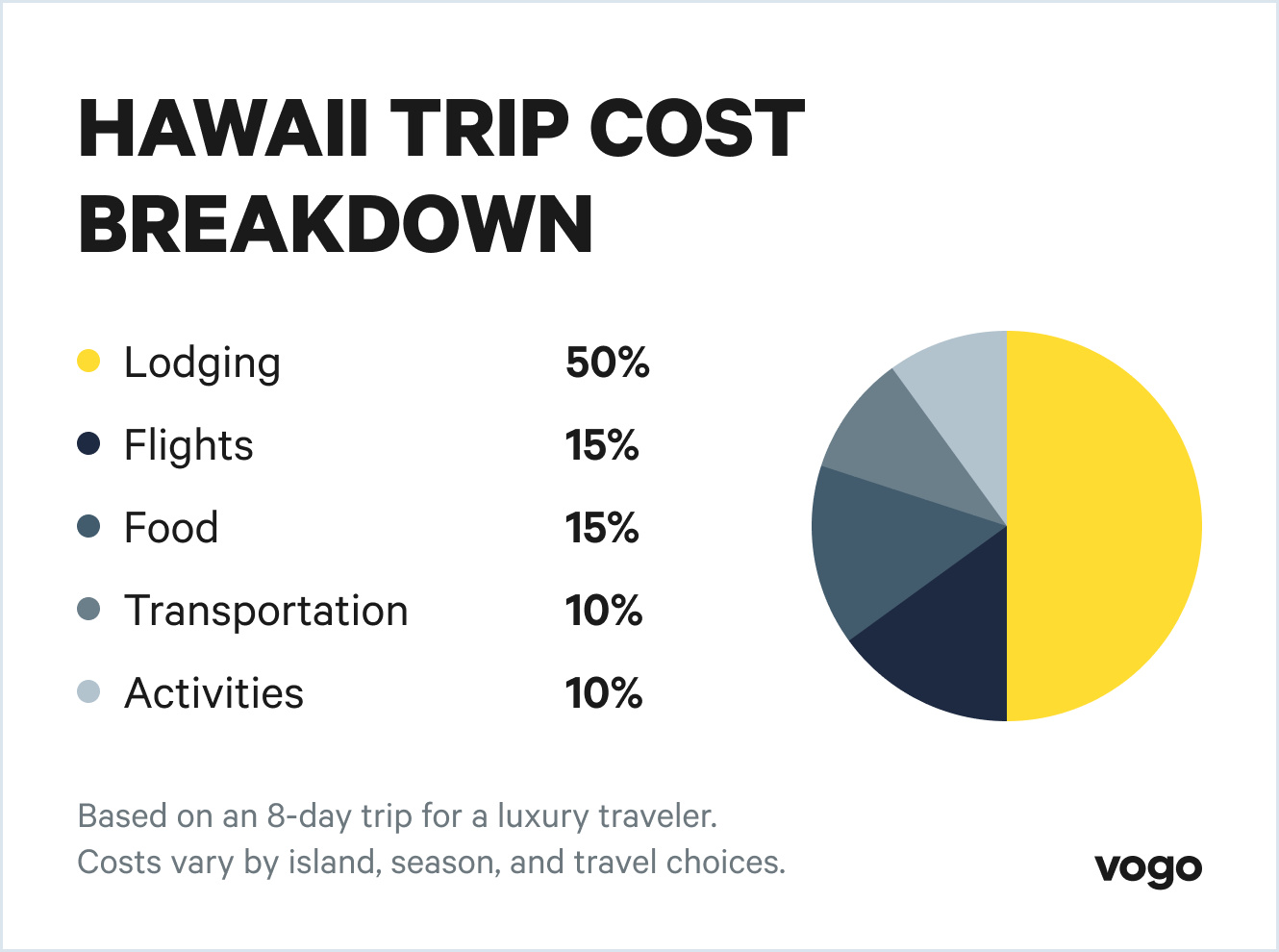
Total trip cost varies based on accommodations, dining, and activities, but these estimates help set a realistic baseline so you can plan your budget with more confidence and adjust based on your travel style, priorities, and the kind of experience you want to have.
| Travelers | Cost per day | Total trip cost |
|---|---|---|
| 1 person | $273 | $2,184 |
| 2 people | $546 | $4,368 |
| Family of 4 | $1,092 | $8,736 |
| *Prices reflect an 8-day stay before flight costs. | ||
What You’ll Spend Your Money On in Hawaii
For a trip to Hawaii, costs will vary. It depends on the flights, accommodations, dining, transportation, and experiences. Understanding how these expenses vary helps travelers plan an itinerary that aligns with their preferred travel style.
| Category | Average spend |
|---|---|
| Flights (round-trip, per person) | $300–$1,000+ depending on flight origin and time of year |
| Accommodation (per night, total) | $200–$1,500 depending on the type of stay |
| Food (per person/day) | $25–$200+ |
| Rental car (per day) | $40–$100 |
| Activities (per person/trip) | $150–$400 |
| Resort fees and taxes | $40–$65 per night + 18–19% lodging taxes |
Flights
Airfare varies by origin, season, and routing, with the most frequent mainland service arriving through Honolulu (HNL), which typically offers the widest range of flight options. Smaller airports such as Lihue (LIH) and Kona (KOA) may have fewer direct routes but provide convenient access to specific islands. Inter-island flights are short, generally under an hour, and make it easy to combine multiple destinations within a single itinerary.
| Route | Average roundtrip range | What to consider |
|---|---|---|
| West Coast → HNL | $300–$600 | Most competitive; widest carrier selection |
| West Coast → OGG or LIH | $480–$700+ | Fewer direct options; higher prices |
| East Coast → HNL | $600–$1,000+ | Usually 1 stop; price varies by hub |
| Inter-island (one-way) | $90–$195 | Inter-island flights are only about 25–55 minutes long |
Accommodations
Lodging is usually the biggest expense on a Hawaii trip, especially when comparing condos, hotels, and the best family resorts across each island. Many resorts also charge nightly fees, typically $40–$57, which can raise the total cost beyond the advertised rate. Condos or vacation rentals with kitchens can provide added flexibility for longer stays and can help moderate dining expenses.
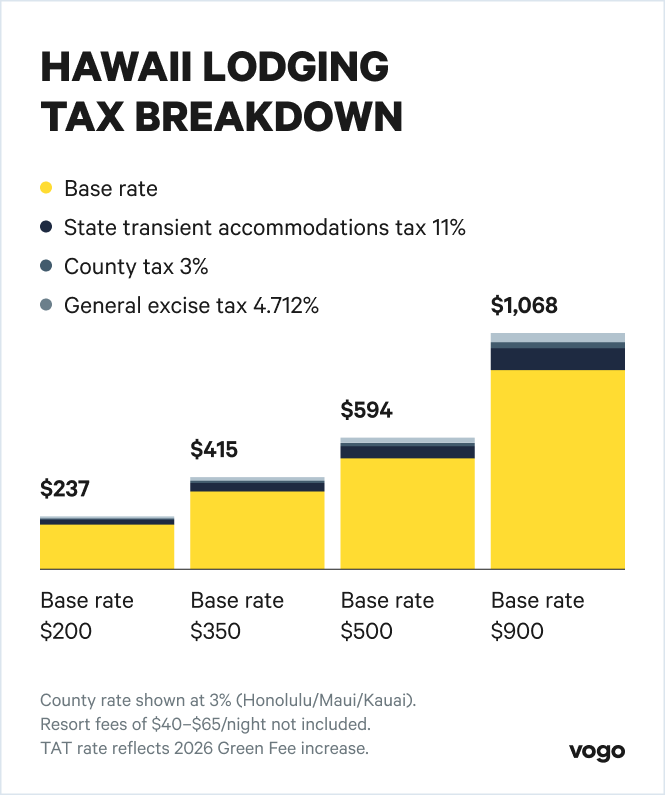
Travelers should also factor in Hawaii’s lodging taxes, which typically add about 18%–19% to the nightly rate. This total includes the state’s Transient Accommodations Tax (around 11%, often referred to as the “green fee”), along with county taxes and the General Excise Tax, which is a separate statewide tax applied to most goods and services. These fees are applied at checkout, so the final price is usually higher than the base rate shown during search.
| Accommodation type | Per-night range | Best for |
|---|---|---|
| Standard Waikiki hotel | $200–$350 | Couples, first-time visitors |
| Condo/vacation rental with kitchen | $220–$1,000 | Families, longer stays, cost control |
| All-inclusive resort | $400–$900+ (includes meals) | Stress-free travelers, families |
| Luxury resort (Wailea, Princeville) | $700–$1,500+ | Honeymooners, luxury travelers |
| * Rates do not include Hawaii’s 18%–19% total lodging tax or resort fees of $40–$65/night where applicable. | ||
Food and dining
Food spending in Hawaii largely depends on how often travelers cook versus dine out. Grocery shopping can help manage daily costs, especially when staying in accommodations with kitchens, while food trucks and local plate lunch spots offer a balance of convenience and local flavor. Full-service restaurants and resort dining provide more elevated experiences but can increase overall trip spend. Beverage pricing can also influence overall dining spend, particularly at resort bars, where cocktails are often priced at a premium due to import costs, taxes, and tourist markups.
| Dining style | Estimated daily cost (per person) | What to consider |
|---|---|---|
| Grocery store | $25–$45 | Best with condo/rental kitchen and getting the most trip value |
| Food trucks, poke, plate lunch spots | $35–$60 | Strong value and authentic local food |
| Mix of casual restaurants and groceries | $60–$100 | Typical mid-range approach |
| Resort and fine dining | $120–$200+ | Cocktails alone can add $50–$80/day |
Transportation
Transportation needs vary by island and itinerary. Travelers should plan for transfers between home, airport, and accommodations, which may include private car services, rideshare, or parking. On Oahu, public transit serves Honolulu and Waikiki, while on Maui, Kauai, and the Big Island, a rental car is typically recommended for accessing beaches, dining, and scenic areas beyond resort locations. Fuel prices tend to be higher than mainland averages due to import logistics.
| Transportation type | Estimated cost | What to consider |
|---|---|---|
| Airport transfer (rideshare/shuttle) | $40–$170 each way | Varies by island and resort location |
| TheBus (Oahu only) | $3 per ride | Best cost-effective option; Waikiki-centric coverage |
| Rental car (per day, pre-tax) | $72 per day | Effectively required outside Oahu |
| Gas (per gallon) | $5.65 per gallon | ~$1.50/gallon more than the mainland West Coast |
| Long-distance rideshare (resort to resort) | $60–$120 each way | Can add up quickly without a rental car |
Activities and Shopping
Hawaii includes a wide range of experiences, from snorkeling tours and cultural attractions to beaches and scenic hikes, many of which double as easy family vacation ideas. Popular activities like luaus and boat tours can add to the trip cost, while public beaches, Pearl Harbor National Memorial, and hikes like Diamond Head are free or low-cost. Booking directly with operators or using attraction passes can help manage costs, and it is worth leaving some budget for shopping and souvenirs.
| Activity | Estimated cost (per person) |
|---|---|
| Helicopter tour | $150–$650 |
| Luau | $130–$250 (per adult) |
| Guided snorkeling trip | $80–$250 |
| Surf lesson | $75–$150 |
| Diamond Head hike (Oahu) | $5 entry, $10 parking per car |
| Pearl Harbor National Memorial | Free (timed entry reservation required) |
| Public beach access | Free |
| Go City pass (multi-attraction) | Starts at $119 for adults, $99 for children |
| Shopping (Ala Moana, resort boutiques) | Plan accordingly; prices mirror or exceed mainland |
Ways to Save on Your Hawaiian Vacation
The cost of a Hawaii trip can vary widely based on when you travel and where you stay. The biggest savings typically come from travel and accommodations, rather than cutting activities.
- Travel during shoulder season (April–June or September–October), when airfare and hotel rates are often 20%–30% lower than peak summer and holiday periods, is one of the most effective hotel booking hacks for Hawaii.
- Book accommodations with kitchens, which allow travelers to prepare some meals and meaningfully reduce daily food costs.
- Fly into Honolulu (HNL), which typically offers the most competitive mainland airfare due to higher flight volume and airline competition.
- Set airfare price alerts and aim for mid-week departures, as Tuesday or Wednesday flights are often less expensive than weekend travel.
- Book activities directly with local operators to reduce excursion costs by 10–15% compared with hotel concierge pricing.
- Prioritize free or low-cost experiences, such as public beaches, scenic hikes, and historical sites like Pearl Harbor National Memorial.
- Consider Oahu or the Big Island over Maui, as Maui often carries a 20%–40% premium on hotels and rental cars.
- Compare hotels, vacation rentals, and condos on Vogo, so the total value can be evaluated side by side rather than focusing only on the nightly rate.
Plan a Hawaii Trip That Fits Your Travel Style
Understanding how much Hawaii costs upfront helps travelers avoid surprises and plan more confidently. Expenses like lodging taxes, resort fees, food, and transportation are predictable with the right research. Travelers can align their itinerary with their preferred travel style, whether visiting with family or friends or planning a romantic getaway.
For families and couples, choosing stays with kitchens and traveling in the shoulder season can make Hawaii more accessible. Exploring top-rated hotels, resorts, and vacation rentals on Vogo makes it easy to compare options by destination, dates, and travel style in one place.

FAQ
Is $2,000 enough for a week in Hawaii?
$2,000 can cover a week in Hawaii for a single traveler, particularly if they fly from the West Coast, share a vacation rental or hostel, grocery shop for most meals, and stick to free or low-cost activities. For couples or families, $2,000 will not be sufficient for a full week all-in. A couple traveling mid-range should expect to spend $4,500–$8,000 total; a family of four will typically need $7,000–$12,000 or more.
What are the cheapest ways to reduce Hawaii trip costs?
The most effective strategies are traveling in shoulder season (April–June or September–October), booking accommodations with kitchens to reduce food spend, flying into Honolulu (HNL) for the lowest airfare, and comparing lodging options across accommodation types on a platform like Vogo before committing. Prioritizing free activities such as beaches, hiking trails, and public historical sites also provides you with greater value.
How much are flights to Hawaii from the West Coast?
Round-trip flights from West Coast hubs like Los Angeles (LAX), San Francisco (SFO), or San Diego (SAN) typically cost $300–$600 off-peak and $480–$700+ during peak seasons. Flying into Honolulu (HNL) offers the most competition and the lowest fares; smaller airports like Lihue (LIH) and Kona (KOA) tend to have higher fares.
What is the best time of year for low-cost Hawaii travel?
Shoulder seasons offer the best combination of lower prices and favorable weather. Avoiding the summer peak, holiday weeks, and spring break typically reduces flight and hotel costs compared with those windows.
Is it cheaper to stay in a hotel or an Airbnb in Hawaii?
Vacation rentals and condos with kitchens can offer strong overall value, especially for families or groups, since preparing meals can reduce daily food costs. However, short-term rental rules vary by island, so it’s important to confirm that a listing complies with local regulations. Comparing both hotels and rentals side by side on Vogo can help travelers find the best fit for their travel style.